
My Professional Journey
My background is a mixture of academia and equestrianism, travelling extensively to develop a deeper understanding. This provides a unique skill set to continue making a difference.
Academic Qualifications
I graduated from Glasgow Veterinary School and started out in equine ambulatory practice in Yorkshire
This followed a move to Edinburgh where I completed an internship and residency in the equine hospital, achieving advanced practitioner status in equine internal medicine and a diploma in Equitation Science.
During my residency I undertook an MScR investigating horse-veterinarian interactions. This highlighted the high injury rate to equine vets, that their understanding of equine behaviour was limited and yet a single lecture on behaviour was found to positively influence how vet students approached difficult horses.
Following this I undertook a PhD investigating the stress response of horses undergoing veterinary care, and the development of techniques to positively influence their experience.
I have undertaken examinations to qualify as a Certified Clinical Animal Behaviourist (CCAB). I was awarded specialist status in equine veterinary behavioural medicine and then fellowship status for Meritorious contributions to clinical practice by the Royal Collage of Veterinary Surgeons
I now lead research projects and supervise PhDs investigating many aspects of equine behaviour and welfare.
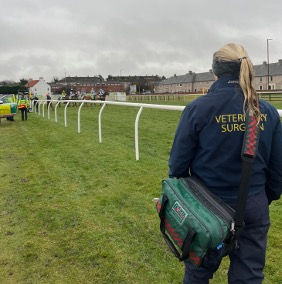
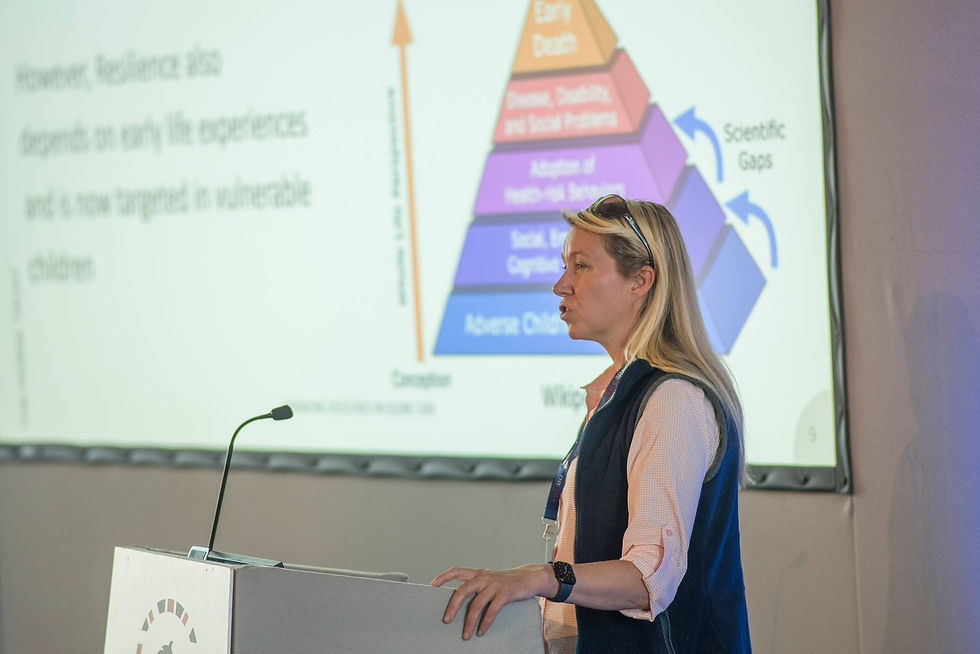
There is no point in undertaking research if it does not make a difference in the real world. I have been very privileged to be able to disseminate knowledge across the globe, presenting hundreds of lectures across the U.K., Europe, North America and Australasia, even Inner Mongolia.
Whilst most audiences are equine vets, there is a diversity of other types of conferences, ranging from the FEI and racing industry to Pony Club and welfare charities.
I have advised and/or contributed to working parties for the Scottish Government, DEFRA, FEI, British Horse racing Authority, Horse Welfare Board, National Equine Welfare Council, and produced educational material for a wide variety of organisations.
A variety of this material is available on the educational resources page
Outreach
Awards

-
2025 Plenary lecture 'Is it pain or behaviour', ISES conference, Colorado
-
2023. Equine speaker of the year, Western Veterinary Conference, Las Vegas.
-
2023. Delivered the John Hickman Plenary lecture at BEVA congress, “Equine Behaviour – The good, the bad and the downright dangerous”
-
2022. Keynote Lecture 'How to ensure your horse gets his medicine'. ISES Conference, Hartpury
-
2022. Top Cited article 2021-2022 in Equine Veterinary Education for the paper ‘Difficult horses–prevalence, approaches to management of and understanding of how they develop by equine veterinarians.’
-
2021. Richard Hartley Clinical Award, BEVA, for the paper “Difficult horses - prevalence, approaches to management of and understanding of how they develop by equine veterinarians”. It is awarded to the senior author of the best paper published in Equine Veterinary Journal or Equine Veterinary Education with direct clinical application.
-
2019. Winner of the best student oral presentation at the International Society for Equitation Science conference, Guelf, Canada
-
2014. Award for ‘Up and Coming Vet’ at The University of Edinburgh Veterinary School awards
As a rider I particularly enjoy backing young horses and setting them up for success in life.
I have competed up to advanced level endurance on a home bred horse and participated in dressage and eventing.
I have been fortunate to train with Manuella McLean (Equitation Science International), Jane Bartle-Wilson (Yorkshire Riding Centre) and Sylvia Loch (Classical Riding).
Whilst undertaking a diploma in Equitation Science I spent several weeks at the Australian Equine Behaviour Centre (now E.S.I.). Travelling around the world I have been exposed to a wide variety of horses, management systems and training approaches. This includes spending a few weeks with Dr Sue McDonald and her semi-feral pony herd in Pennsylvania.
When I first took an interest in equine behaviour I initially pursued education under the Monty Roberts and Parelli systems. Developing a scientific understanding of equine behaviour, specifically learning theory, allowed me to see these training methods through a different lens. I was then able to understand why certain things worked or didn't.
Science will never replace excellent horsemanship, but it can help to enhance it

Equestrian


